
How Does a Mechanical Watch “Tick”? (Spoiler: No Batteries!)
Mechanical watches are like tiny, hardworking factories—no batteries, just clever gears and springs. Let’s break it down like explaining a cool toy:
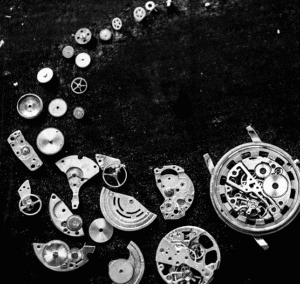
Most automatic mechanical watches (the ones that wind as you move) have a secret “power helper”: the automatic winding device. Pop open the watch’s back cover, and you’ll spot it on the movement—the watch’s “heart.” Fun fact: This device makes automatic watch movements a bit thicker than manual-wind ones!
Inside the device, a team works: an automatic rotor (think a tiny metal weight), a reversing wheel, and other gears. The rotor is screwed to the movement’s center—and here’s the magic: Swinging your arm (waving, grabbing coffee) makes the rotor spin. This spins the reversing wheel, which pushes gears to “wind” the mainspring (the spring that stores power). It’s like your arm gives the watch an all-day energy boost!
If you have a full-automatic watch (today’s most common type), its rotor is smarter—it spins left or right to wind the spring. Most rotors are semicircular, made of heavy metal with thick edges (so weight stays on the rim). They use gravity and your arm’s movement to spin—no extra work needed!
The “Troublemakers”: 4 Things That Mess With Timing
Now, the fun part: Why does your watch’s timing go wonky? Here are 4 common culprits, simply explained:
- Temperature: Your Watch Hates Extremes!
Felt sluggish in heat or stiff in cold? Your watch does too! When it’s too hot/cold:
- The “balance spring” (tiny coiled spring controlling timing) changes length—longer in heat, shorter in cold—throwing off ticks.
- Movement lubricant gets runny (hot) or thick (cold), making gears speed up or slow down.
Pro tip: For custom mechanical watches (e.g., outdoor styles), Hongliyuan as your watch supplier picks heat/cold-resistant materials to reduce this issue.
- Regulator Pins: Quick Fix, Tiny Flaw
Regulator pins are like “quick adjustment buttons”—cheap and fast for watchmakers to calibrate time. But they mess with “isochronism” (consistent ticking) and can make the watch run fast on your wrist, slow on a table. Worst of all: These errors are random—no simple fix!
- Balance Spring Balance: Gravity’s Sneaky Trick
The balance spring has a hidden issue: Its center of gravity shifts as the “balance wheel” (swinging part) moves. Add gravity, and the watch speeds up or slows down—depending on if you wear it or set it down.
- External Chaos: Knocks, Dust, and More
Your watch lives in a messy world! A hard drop, dust inside, or strong magnetic fields (from phones/laptops) jumble tiny gears. That’s why custom mechanical watches—especially sports or daily-wear styles—need extra protection from a skilled watch supplier.
Wrapping Up: Want Perfect Timing?
These quirks make mechanical watches special—but they don’t ruin timekeeping. Curious how to fix them? Stay tuned for our next post, where Hongliyuan’s watchmakers share pro tips!
Ready to turn your watch dream into reality? Whether it’s a durable daily piece or a one-of-a-kind custom watch, Hongliyuan has you covered. Got more questions about mechanical watch timing issues? Reach out to Hongliyuan anytime—we love talking watches! Ready to craft your dream mechanical watch (automatic or custom)? As a trusted Hongliyuan Watch Manufacturer & watch supplier, we blend precision, durability, and style—no more worrying about avoidable timing quirks. Let’s build your perfect timepiece.