
In watchmaking, the strap is often called the “second face” of the timepiece. While the movement and case represent the engineering, the strap defines the wearer’s experience replica watches and the brand’s immediate vibe. Whether you are launching a rugged diver or a minimalist dress watch, selecting the right watch strap materials is a critical decision that impacts both production cost and customer satisfaction.
At Hongliyuan Watch, we have spent three decades helping global brands navigate the transition from design to physical product. As a seasoned OEM watch supplier, we know that the strap is not an accessory; it’s a foundational part of the product’s identity. Here is our unfiltered breakdown of the most common materials used in custom watch straps manufacturing.
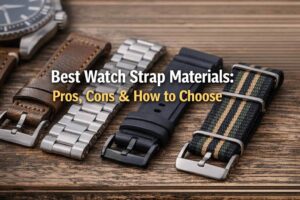
Genuine Leather: The Timeless Authority
Leather remains the gold standard for luxury and classic timepieces. From calfskin to exotic textures, it offers a “break-in” period that makes the watch feel personal to the owner.
-
The Pros: High perceived value, breathable, and extremely comfortable over time.
-
The Cons: Susceptible to sweat, water, and humidity. High-quality leather requires ethical sourcing, which can increase the bill of materials.
-
Expert Insight: For microbrands designing custom watch straps, we often suggest “quick-release” spring bars. It allows your customers to change the look of their watch in seconds, increasing brand engagement.
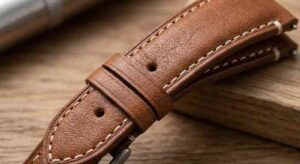
Stainless Steel (316L): The Symbol of Durability
If your brand focuses on longevity replica watches store and a professional look, stainless steel watch bands are virtually non-negotiable. Most premium OEM partners use 316L steel to match the watch case for a seamless, weighty aesthetic.
-
The Pros: Virtually indestructible, waterproof, and hypoallergenic.
-
The Cons: Adds significant weight to the watch. Precise sizing usually requires tools (removing links), which can be a minor friction point for the end consumer.
-
Expert Insight: Pay close attention to the clasp. A “butterfly” clasp looks elegant for dress watches, but a “milled” or “deployment” clasp is preferred for heavy-duty tool watches.
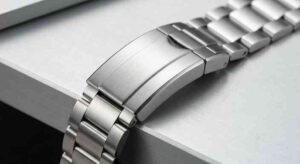
Silicone and FKM Rubber: The Choice for Performance
When evaluating leather vs silicone straps for sports or dive watches, silicone (or high-grade rubber) is the undisputed winner. It is designed for action.
-
The Pros: 100% waterproof, available in any Pantone color, and highly affordable for mass production.
-
The Cons: Cheap silicone can attract lint and dust.
-
The Hongliyuan Standard: For premium collections, we strongly recommend FKM (Fluoroelastomer) rubber. It is denser, more resistant to UV rays, and feels significantly more “luxury” and “silky” against the skin than standard silicone.
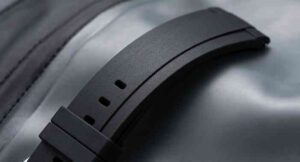
Nylon and NATO: The Utility Play
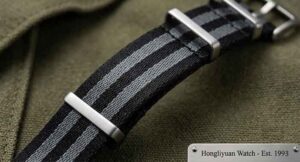
Nylon straps (often called NATO straps) have moved from military necessity to high-fashion staples. They are the perfect entry point for brands targeting a younger, more active, or “streetwear” demographic.
-
The Pros: Extremely cheap to produce, washable, and adds a “military-spec” or “adventure-ready” ruggedness to the design.
-
The Cons: Can feel “cheap” if the weave is too loose or the hardware (buckles) is flimsy.
-
Expert Insight: Pairing a high-end automatic watch with a premium seatbelt-weave nylon strap is a trending “high-low” fashion move that many successful Kickstarter brands have used to great effect.
Technical Comparison: At a Glance
| Material | Best For | Durability | Manufacturing Cost |
| Leather | Dress/Classic | Medium | Mid to High |
| Stainless Steel | Luxury/Daily | High | High |
| FKM Rubber | Professional Diver | High | Mid |
| Nylon (NATO) | Field/Casual | Medium | Low |
FAQ
1. Which watch strap materials are best for sensitive skin?
Generally, 316L stainless steel and high-grade FKM rubber are the safest bets as they are hypoallergenic. Avoid low-quality “genuine leather” that may use harsh tanning chemicals.
2. Can we customize the buckle on our stainless steel watch bands?
Absolutely. We can laser-etch, deeply emboss, or even PVD-coat your logo on buckles replica watches and clasps across all material types. This is a crucial detail for brand recognition.
3. In the debate of leather vs silicone straps, which has a higher MOQ?
Typically, custom watch straps made of silicone or rubber require a higher Minimum Order Quantity (MOQ) because they require a custom steel mold. Leather straps offer more flexibility for smaller “microbrand” batches.
4. Do we need a specialist OEM watch supplier for straps?
While you can source them separately, working with a full-service OEM watch supplier like Hongliyuan Watch ensures that the strap color matches the dial, the lug width is perfect, and the final quality is consistent.
Final Watch Manufacturing Advice from a 30-Year Veteran
Don’t treat the strap as an afterthought. A $500 mechanical watch can feel like a $50 toy if the strap is stiff, smelly, or the hardware rattles.
Our best watch manufacturing advice is this: order your strap samples early in the prototyping phase. Do not wait until the watch head is finalized. Test the samples for “scent” (in leather), flexibility, color fastness, and how the weight balances with your specific watch case.
As a trusted OEM watch supplier, we always prioritize a holistic design approach. The magic happens when the case, dial, and strap work in perfect harmony.
Are you ready to design your next collection?