
Starting a watch microbrand has never been more accessible.
A decade ago, launching a watch brand required massive budgets, complex supply chains, and deep industry connections. Today, small teams — and even solo founders — are building successful watch brands with the help of experienced OEM manufacturing partners.
But while the barrier to entry is lower, competition is much higher.
The brands that succeed are usually not the ones with the biggest budgets. They are the ones that understand product positioning, manufacturing, branding, and customer expectations from the beginning.
If you’re planning to start your own watch brand, this guide will walk you through the real OEM process step by step.
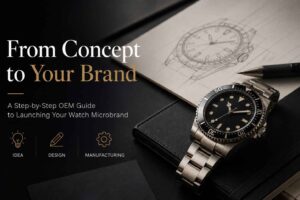
Why Watch Microbrands Continue to Grow
The watch industry has changed dramatically over the past few years.
Consumers are no longer buying watches only because of legacy names. Many buyers now prefer:
- Smaller independent brands
- Unique designs
- Better value for money
- Community-driven storytelling
- Limited production runs
This shift has created huge opportunities for new microbrands.
In fact, some of today’s most successful independent watch companies started with a single small production run and a strong brand story.
Step 1 — Define Your Brand Positioning First
One of the biggest mistakes new founders make is starting with the watch itself.
In reality, successful brands usually start with positioning.
Before discussing cases, dials, or movements, ask yourself:
- Who is your target customer?
- What price range are you targeting?
- Are you building a fashion watch or enthusiast watch?
- What makes your brand different?
- Why should customers remember your brand?
A clear identity makes every later decision easier.
Step 2 — Choose the Right Watch Category
Many successful microbrands focus on one core category first.
Popular options include:
Dive Watches
Still one of the strongest categories for microbrands due to enthusiast demand.
Field Watches
Simple, wearable, and easier to develop for first-time brands.
GMT Watches
Growing quickly because of travel and collector interest.
Dress Watches
Suitable for minimalist or fashion-oriented brands.
Trying to launch multiple styles too early often increases cost and complexity.
Focused brands usually perform better.
Step 3 — Understand the OEM Watch Manufacturing Process
A professional OEM watch manufacturer typically helps with:
- Case sourcing
- Dial development
- Movement selection
- Hands and lume
- Packaging
- Assembly
- Quality control
This is why choosing the right manufacturing partner matters so much.
A reliable factory can help prevent costly beginner mistakes before production even starts.
Step 4 — Select the Right Movement
The movement affects pricing, positioning, and customer perception.
Most watch microbrand startups choose between:
Japanese Movements
Popular choices include:
- Seiko NH35
- Miyota 9015
- Miyota 8215
Advantages:
- Reliable
- Cost-effective
- Easy servicing
Swiss Movements
Often used for higher-end positioning.
Advantages:
- Stronger premium perception
- Swiss branding value
Disadvantages:
- Higher cost
- Longer lead times
For most startup brands, Japanese movements offer the best balance.
Step 5 — Pay Attention to Dial and Finishing Details
Many new brands underestimate how much customers notice finishing quality.
In reality, details like these often determine perceived value:
- Dial texture
- Lume quality
- Hand finishing
- Case brushing
- Bezel alignment
- Crystal clarity
A clean, refined watch with thoughtful finishing often performs better than an overcomplicated design.
Step 6 — Understand MOQ Before Production
MOQ (Minimum Order Quantity) is one of the most important OEM topics.
Many factories require:
- 300 pcs
- 500 pcs
- Or even higher quantities
But modern microbrand manufacturing is changing.
Today, more flexible OEM partners can support smaller startup quantities for serious brands.
At Hongliyuan Watch, many developing brands begin with manageable production quantities before scaling later.
This helps reduce early inventory pressure while maintaining product quality.
Step 7 — Build Your Brand Before Mass Production
A common mistake is waiting until production is finished before starting marketing.
The strongest microbrands usually build audience early through:
- Reddit communities
- Kickstarter campaigns
- Email lists
- Watch forums
People buy stories and identity — not only specifications.
Building anticipation before launch can dramatically improve your first release.
Step 8 — Don’t Ignore Packaging and Presentation
Packaging strongly affects first impressions.
Even a good watch can feel cheap with poor presentation.
Simple upgrades like:
- Better boxes
- Warranty cards
- Travel cases
- Instruction booklets
can significantly improve customer experience.
For many watch brand startups, presentation becomes part of the brand identity itself.
Step 9 — Focus on Long-Term Consistency
Launching the first watch is only the beginning.
Long-term success usually comes from:
- Consistent quality
- Reliable communication
- Stable manufacturing
- Strong customer trust
This is why many growing brands eventually move toward long-term OEM relationships rather than constantly switching suppliers.
Why Choosing the Right OEM Partner Matters
For new founders, manufacturing can feel overwhelming.
A strong OEM partner should not only produce watches — they should also help guide development decisions.
At Hongliyuan Watch, we work with emerging brands on:
- Custom watch manufacturing
- Case and dial development
- Prototype refinement
- Material selection
- Production quality control
- Scalable manufacturing planning
For many startups, having a factory that understands both manufacturing and brand-building makes the entire process much smoother.
FAQ — About Starting a Watch Microbrand
How much does it cost to start a watch microbrand?
Costs vary widely depending on design complexity, movement choice, MOQ, and packaging. Many startups begin with smaller controlled production runs.
What is the best movement for a startup watch brand?
Japanese movements like Seiko NH35 and Miyota 9015 are popular because they balance reliability and affordability.
How long does OEM watch production take?
Typically:
- Prototype development: 3–6 weeks
- Production: 30–60 days
depending on customization level.
Can I start a watch brand with low MOQ?
Yes. Some experienced manufacturers now support lower MOQs for growing brands.
Is it better to use stock parts or fully custom designs?
For first launches, many successful brands combine custom branding with proven component structures to reduce risk.
How important is packaging for a watch microbrand?
Very important. Packaging strongly affects perceived value and unboxing experience.
Final Thoughts
Starting a watch microbrand today is more achievable than ever — but building a successful one still requires smart decisions.
The strongest brands usually focus on:
- Clear positioning
- Product consistency
- Thoughtful design
- Reliable manufacturing partnerships
Because in the end, customers rarely remember only specifications.
They remember how the product made them feel.
At Hongliyuan Watch, we help growing watch brands turn ideas into production-ready products through flexible OEM support, manufacturing experience, and long-term collaboration.
Are you ready to turn your vision into a reality?
[Consult with Hongliyuan Watch for a Custom Production Quote]