
When customers evaluate a watch, they often focus on design, movement, or brand story—but one critical component is frequently overlooked: the watch crystal.
The choice between sapphire vs mineral crystal is not just a technical decision. It directly impacts durability, user experience, and brand perception.
For watch brands aiming at premium positioning, the answer is clear—glass is not a place to cut corners.
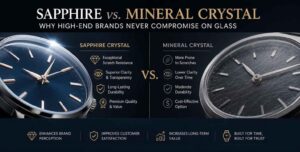
What Is a Watch Crystal and Why It Matters
The watch crystal is the transparent cover that protects the dial. While it may seem simple, it plays a crucial role in:
- Scratch resistance and longevity
- Visual clarity and readability
- Overall product quality perception
- After-sales durability
- best replica watches
A poor-quality crystal can undermine even the best dial design.
Sapphire Crystal – The Standard for High-End Watches
What Is Sapphire Watch Glass?
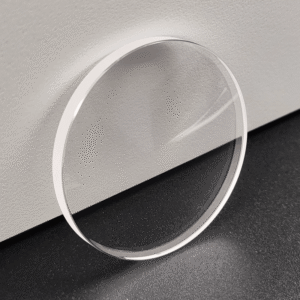
Sapphire crystal is made from synthetic sapphire, one of the hardest materials used in watchmaking.
Key Advantages
- Exceptional scratch resistance (second only to diamond)
- Superior clarity and transparency
- Long-lasting premium appearance
- Strong resistance to daily wear
- barata Rolex réplica
Limitations
- Higher production cost
- Slightly more brittle under extreme impact
Best Use Cases
- Luxury and premium watches
- Long-term daily wear products
- Brands focused on quality and durability
👉 Insight: Most high-end brands choose sapphire because it maintains a “like-new” look even after years of use.
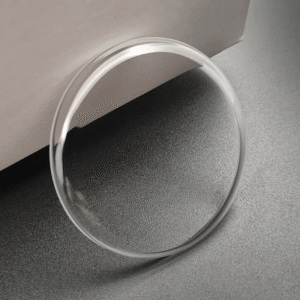
Mineral Crystal – The Cost-Effective Alternative
What Is Mineral Watch Glass?
Mineral crystal is a type of hardened glass treated to improve durability.
Key Advantages
- More affordable than sapphire
- replica watches
- Better impact resistance in some cases
- Easier to manufacture in large volumes
Limitations
- Prone to scratches over time
- Lower perceived value
- Requires replacement more frequently
Best Use Cases
- Entry-level watches
- Fashion watches with shorter lifecycle
- Large-scale production with tight budgets
👉 Insight: Mineral glass is widely used in mass-market watches, but rarely in premium collections.
Sapphire vs Mineral Crystal: Key Differences
| Feature | Sapphire Crystal | Mineral Crystal |
|---|---|---|
| Scratch Resistance | Excellent | Moderate |
| Durability | High (scratch) | Medium |
| Impact Resistance | Moderate | Slightly better |
| Cost | Higher | Lower |
| Brand Perception | Premium | Entry to mid-level |
👉 Conclusion: If your goal is to build a premium brand, sapphire is not optional—it’s expected.
Why High-End Brands Always Choose Sapphire
Luxury watch brands prioritize long-term user experience and brand reputation.
Using mineral glass may reduce upfront cost, but it often leads to:
- Visible scratches after short-term use
- Lower customer satisfaction
- Reduced perceived value
In contrast, sapphire crystal ensures:
- Long-lasting clarity
- Higher resale value
- Stronger brand trust
👉 Strategic Insight: The watch crystal is a small cost component with a huge impact on brand positioning.
Choosing the Right Crystal for Your Watch Brand
When developing a watch collection through custom watch manufacturing, consider:
1. Brand Positioning
- Premium / Luxury → Sapphire
- Fashion / Entry-level → Mineral
2. Target Market Expectations
- Western premium markets expect sapphire as standard
- Budget-conscious markets may accept mineral
3. Product Lifecycle
- Long-term wear → Sapphire
- Seasonal collections → Mineral
4. Price Strategy
- Higher margin → Sapphire
- Volume-driven → Mineral
Why Manufacturing Expertise Matters
Selecting the right material is only part of the equation—execution quality is critical.
At Hongliyuan Watch, we help brands choose and implement the most suitable watch crystal solutions based on:
- Product positioning
- Target market
- Cost structure
- Design requirements
With extensive experience in custom watch manufacturing, we ensure precise crystal fitting, coating options (such as anti-reflective layers), and consistent quality across production batches.
For brands that aim to compete in higher segments, working with a reliable manufacturing partner makes all the difference.
FAQ – Watch Crystals
1. Is sapphire crystal really scratch-proof?
Not completely scratch-proof, but highly scratch-resistant. Only materials like diamond can scratch it.
2. Why do luxury watches use sapphire instead of mineral glass?
Because sapphire maintains clarity and resists scratches, preserving the watch’s premium appearance over time.
3. Does sapphire crystal break easily?
It is harder but slightly more brittle than mineral glass. However, under normal use, it is highly durable.
4. Can mineral glass be upgraded later?
In most cases, no. The crystal type is determined during production.
5. Is sapphire worth the higher cost?
Yes, especially for brands targeting long-term value, higher margins, and better customer satisfaction.
6. What is anti-reflective coating on sapphire?
It’s a coating applied to reduce glare and improve readability, often used in high-end watches.
Final Thoughts: Don’t Compromise on What Customers See First
In watch design, every detail contributes to the final perception—but the crystal is one of the most visible components.
Choosing between sapphire vs mineral crystal is ultimately a decision about your brand’s future:
- Do you compete on price?
- Or do you compete on quality and perception?
At Hongliyuan Watch, we support watch brands in making the right decisions from concept to production, ensuring every detail—including the crystal—aligns with your market positioning.
If you’re building a watch brand that aims to stand out, upgrading to sapphire is not just a feature—it’s a statement.